Most AI projects fail before they start. Not because the technology is wrong — but because nobody asked the right question first.
I’m Matt Sheehan. Twenty-five years ago I started building geospatial systems. What that discipline taught me — before AI became a boardroom conversation — is that the hardest problem was never collecting the data. It was connecting data to understanding. Location to cause. Observation to decision.
Today that problem has still to be solved. In fact it just got bigger.
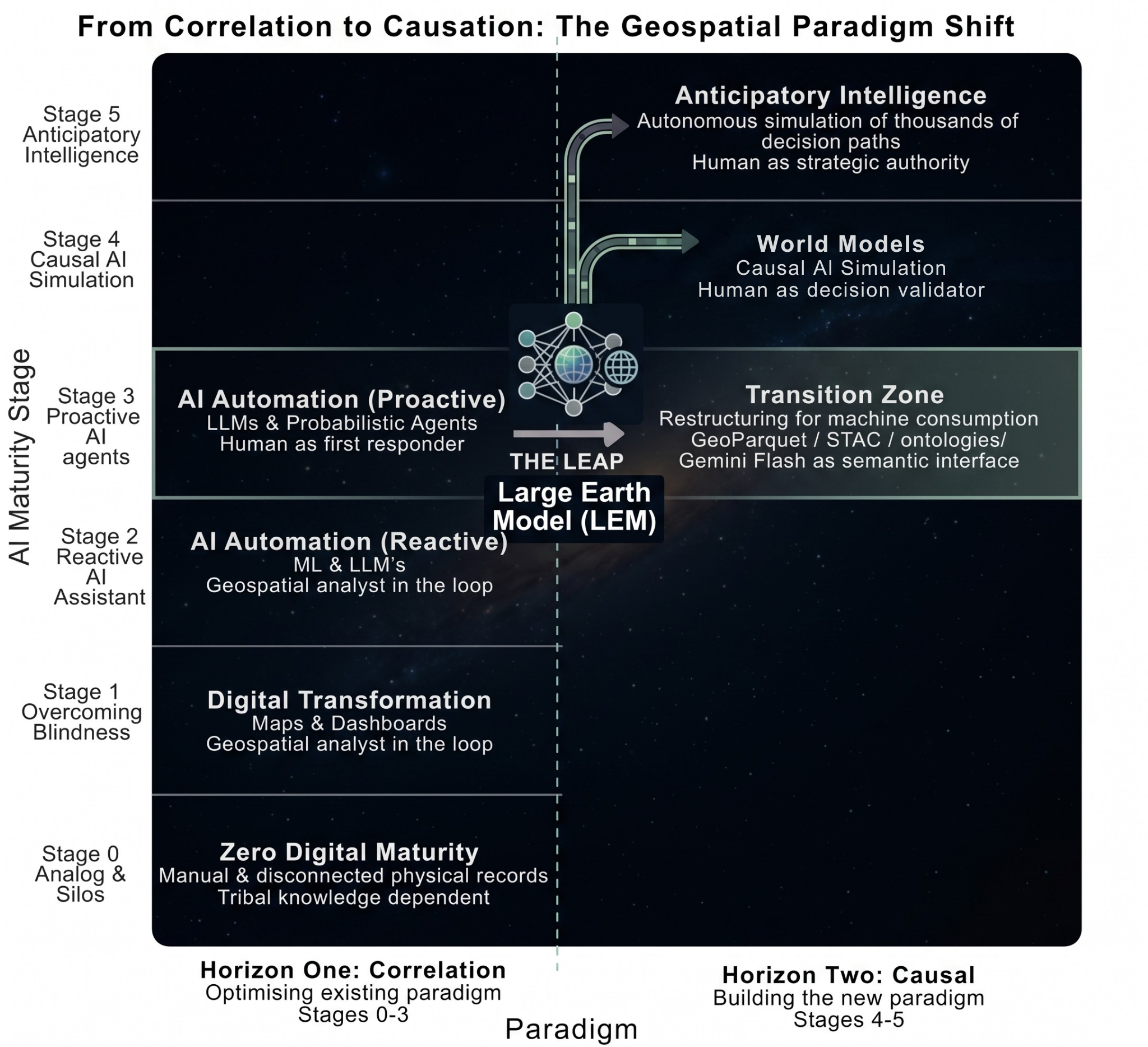
My current focus is the gap at the heart of modern AI: the difference between systems that perceive the world and systems that reason causally about it. The sensing layer is being built. The reasoning layer is the next frontier.
My work approaches this through geospatial intelligence — the richest, most physically grounded data foundation available — as the domain where causal reasoning gets proven first. That work I call Causal Planetary Intelligence.
I write about this weekly in the Decision Layer Newsletter. I develop frameworks — including the Six-Stage AI Maturity Model and the Opportunity-to-Value Framework — that help organisations navigate the transition from correlation to causal reasoning.