SpatialNext is an advisory practice — helping organisations ask the right questions before the build starts.
The AI is running. The human is present. Nobody designed what happens between them.
That gap – between machine output and the person who has to act on it – is where most AI deployments quietly fail. Not because the technology is wrong. Because nobody asked the right question before the build started:
Who is this decision for, and what does that human actually need?
I’m Matt Sheehan. AI strategist. I’ve spent 25 years at the intersection of spatial intelligence and consequential decision-making.
My thinking sits across three layers:
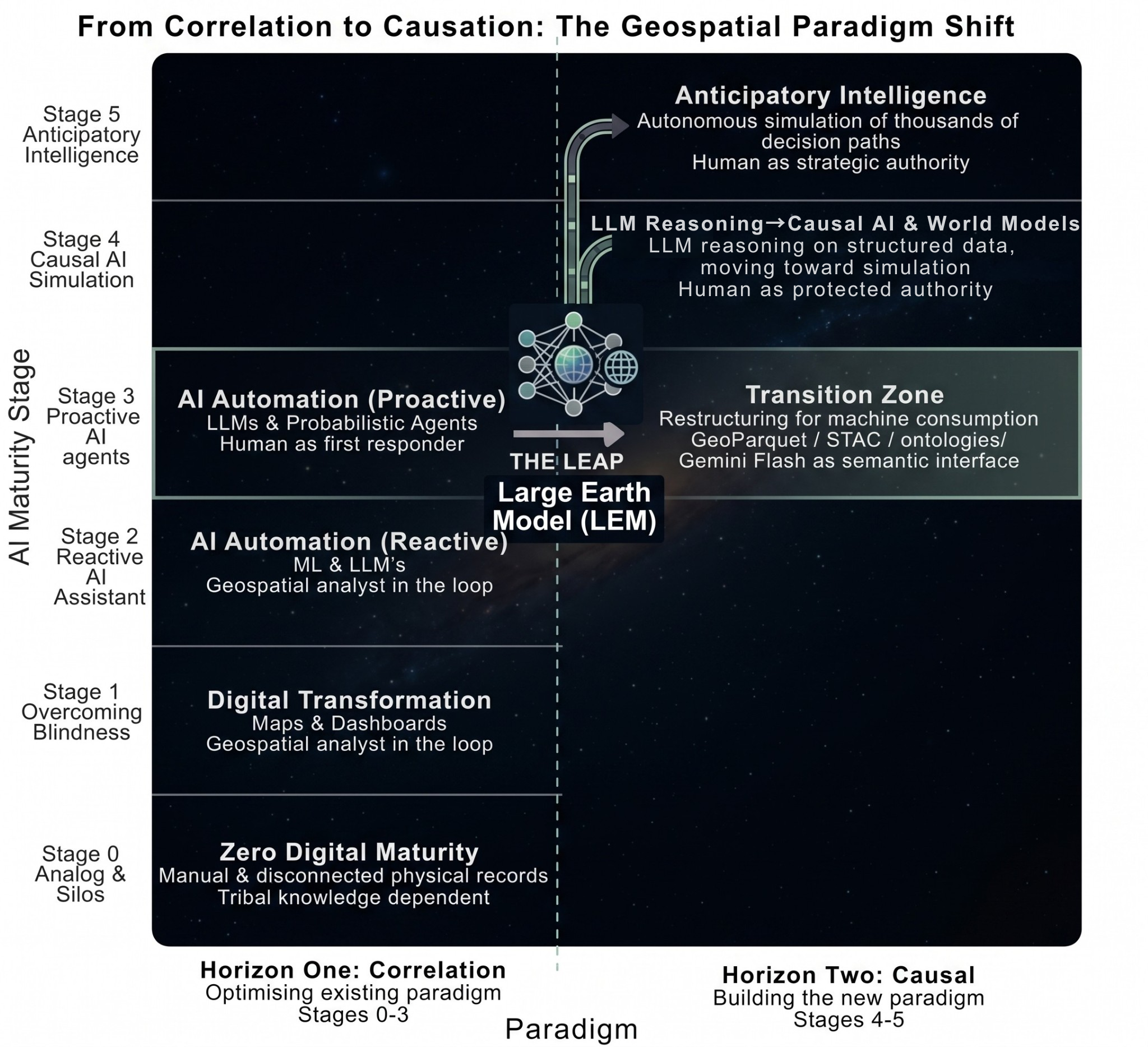
The sensing layer — the data infrastructure the geospatial industry spent three decades building. Satellites, IoT networks, real-time feeds covering the world at scale. Most organisations have invested heavily here.
The causal reasoning layer — systems that don’t just perceive the world but simulate it. Reasoning about cause and effect, modelling what happens if you intervene. This is arriving faster than most organisations realise.
The decision layer — the one almost nobody is designing. Which decisions the machine can settle on its own. Which ones need to reach a human, and what that human is actually authorised to do once it does. Whether the system is built to use human judgment where it matters, or skips it by default.
The third layer is where AI deployments fail. It is also where my thinking is focused.
If that layer hasn’t been designed in your organisation yet, that’s usually where the conversation starts: mattsheehan@spatialnext.io